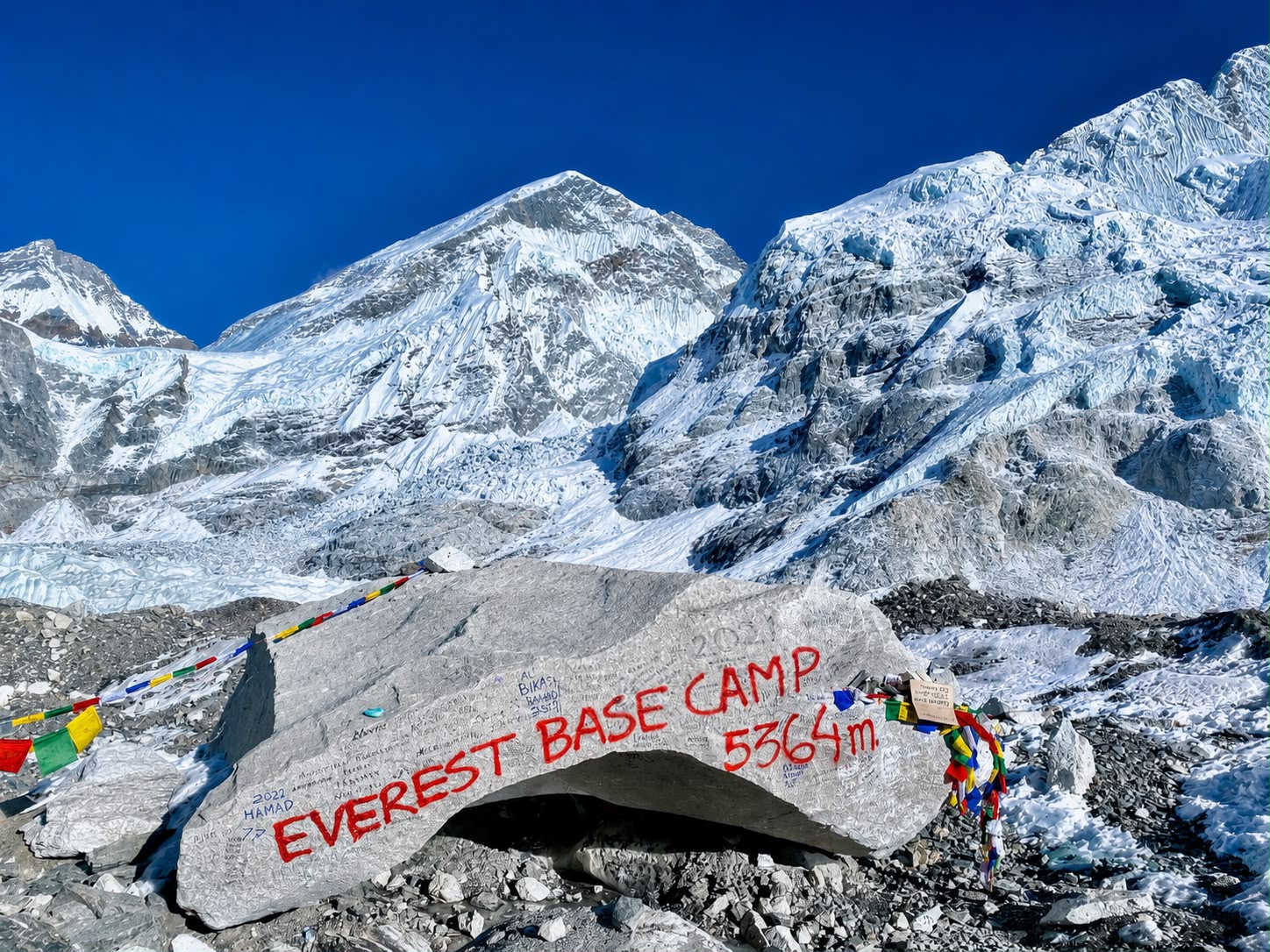
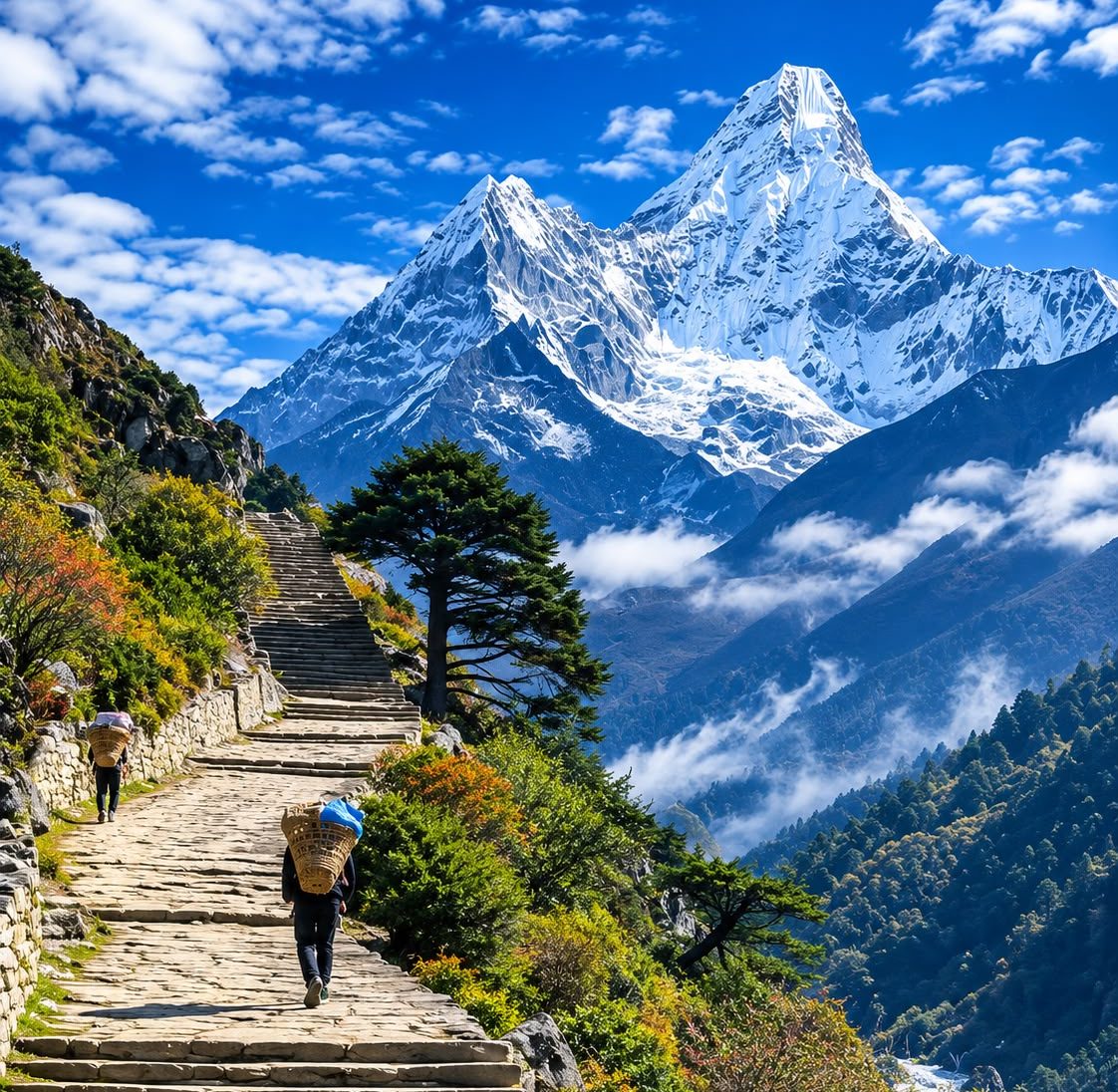
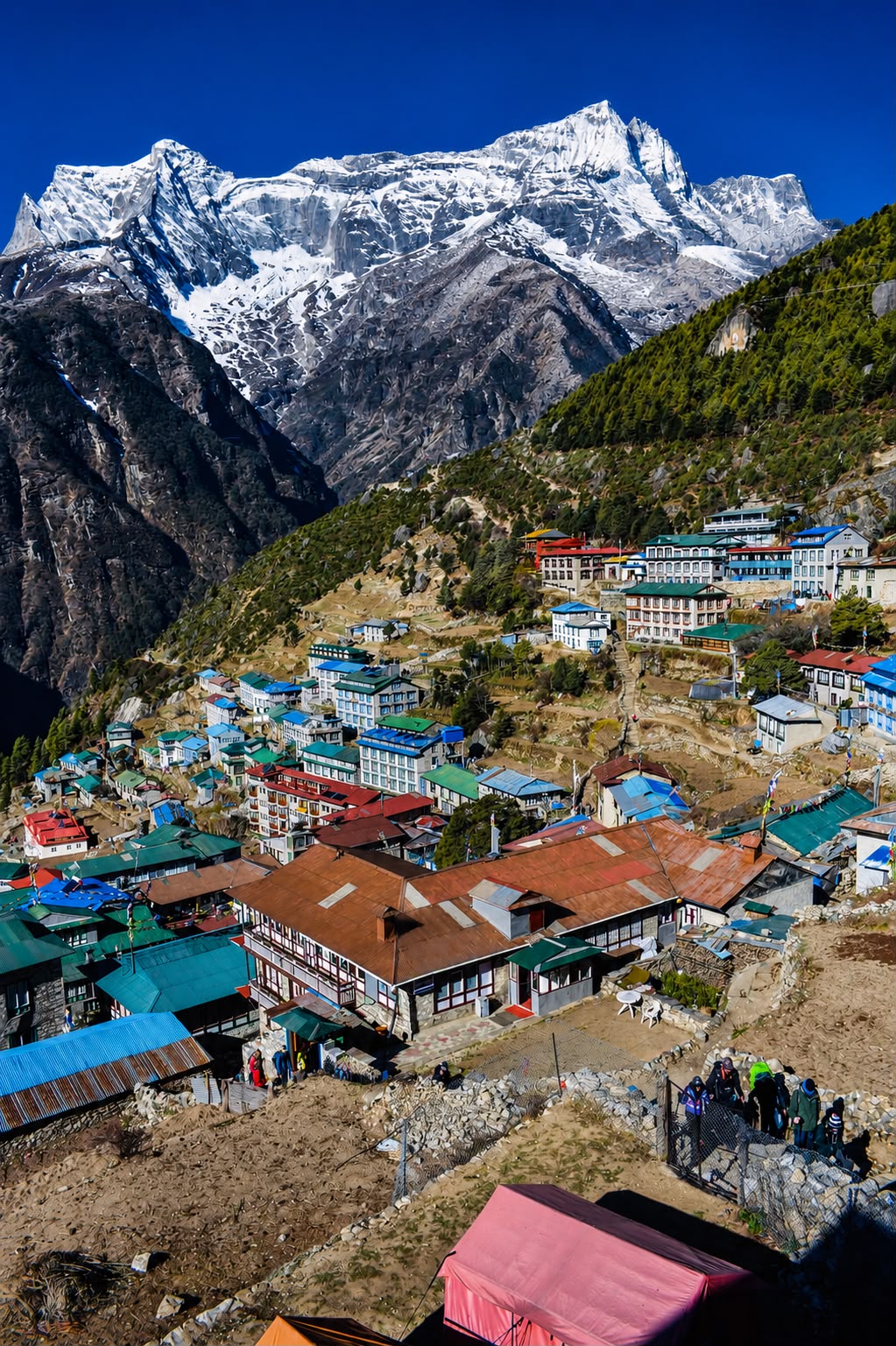
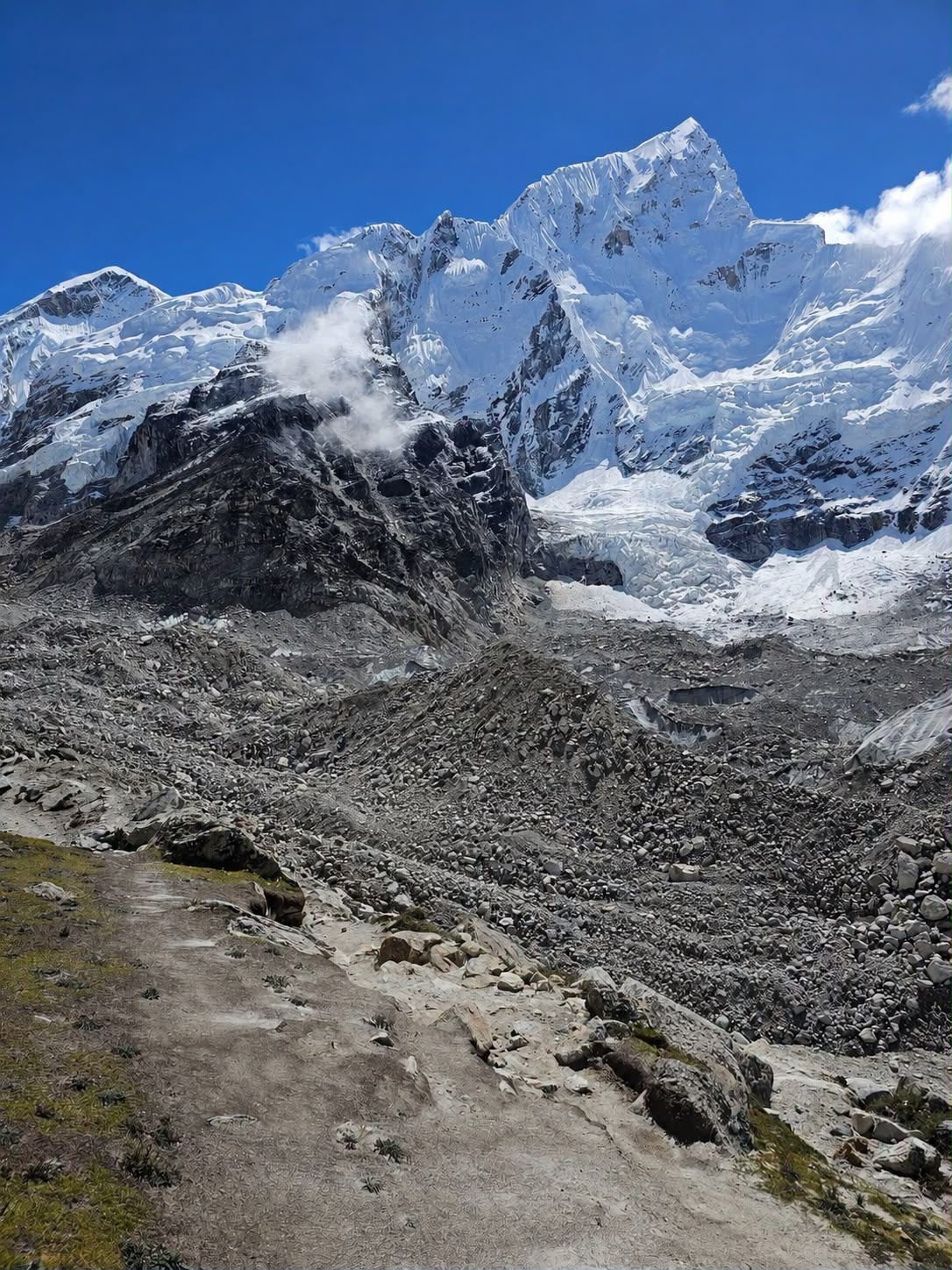
How to Prepare for the Everest Base Camp Trek?
Proper preparation for this 14-day Himalayan adventure requires building cardiovascular endurance, leg strength, and mental resilience. Activities such as running, cycling, hiking, or brisk walking should be practiced regularly, ideally 3–4 times per week.
Strength training exercises like squats, lunges, and step-ups are highly beneficial for handling steep ascents and descents. Acclimatization is also a key factor, so following rest days in the itinerary is essential to reduce altitude-related risks.
Staying hydrated, eating balanced meals, and using proper trekking footwear significantly improve comfort and safety during the journey.
Best Time for Everest Base Camp Trek
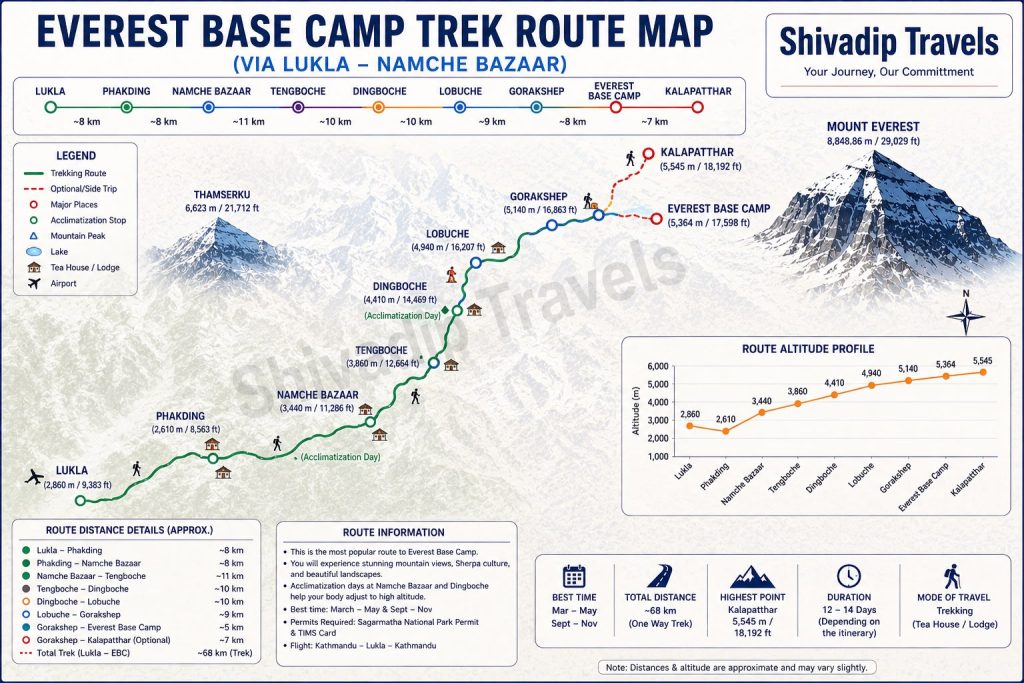
The most favorable seasons for the Everest Base Camp Trek are spring (February to May) and autumn (late September to November). These periods offer stable weather, clear skies, and excellent visibility of Himalayan peaks.
Spring brings blooming rhododendrons and vibrant landscapes, while autumn offers crisp air and breathtaking mountain views. These seasons are considered ideal for trekking due to their predictable weather conditions.
Monsoon months (June to mid-September) bring heavy rainfall and slippery trails, while winter (December to February) is extremely cold with temperatures dropping as low as -20°C. Proper gear and preparation are essential if trekking during colder months.
Why Choose Shivadip Travels for Everest Base Camp Trek?
Shivadip Travels is a trusted trekking operator dedicated to delivering safe, well-organized, and memorable Himalayan experiences. From your arrival in Kathmandu to the completion of your journey, we ensure complete support and professional service.
Our team focuses on responsible tourism by following sustainable trekking practices and supporting local communities along the route. We prioritize safety, comfort, and authentic cultural experiences throughout the trek.
The Everest Base Camp itinerary is carefully designed by experienced professionals to provide the perfect balance of adventure, acclimatization, and cultural exploration.
Our Commitment to Responsible Travel
At Shivadip Travels, we believe travel should create positive impact. We actively promote eco-friendly trekking practices, support local economies, and encourage respectful cultural interaction.
We strictly follow ethical tourism principles, ensuring fair treatment of staff and responsible environmental practices. Our guides are trained not only in navigation and safety but also in cultural awareness and sustainability.
We work only with eco-conscious lodges that reduce plastic use and promote energy efficiency, helping preserve the beauty of the Everest region for future generations.
Flights, Transfers & Baggage Handling
The journey begins with a scenic flight to Lukla, the gateway to the Everest region. Depending on weather conditions, flights may experience delays or schedule changes. Shivadip Travels recommends keeping at least one to two buffer days in your travel plan for flexibility.
In rare cases where flights are disrupted, helicopter alternatives may be arranged for emergency return options. All airport transfers in Kathmandu are managed through private transportation for convenience and comfort.
Any extra luggage not required for trekking can be safely stored at your hotel in Kathmandu. During peak seasons, flights may operate from Ramechhap (Manthali Airport), requiring a road transfer before the short mountain flight to Lukla.
Permits & Entry Requirements
To complete the Everest Base Camp Trek, several permits are required. Shivadip Travels arranges all necessary documentation in advance, including:
Sagarmatha National Park Entry Permit
Khumbu Pasang Lhamu Rural Municipality Permit
TIMS Card (Trekkers’ Information Management System)
These permits are mandatory and must be presented at multiple checkpoints throughout the trek. Travelers are advised to carry photocopies of passports and permits for verification purposes.
Connectivity: Internet, Electricity & Mobile Network
As altitude increases, facilities become limited. Charging electronic devices is available at most teahouses, but costs increase at higher elevations. Carrying a high-capacity power bank (20,000mAh or more) is strongly recommended.
Internet access is available through prepaid trekking network cards such as Everest Link, while some lower villages offer paid or complimentary WiFi. Mobile coverage is mainly provided by Nepal Telecom, while other networks may have weak or inconsistent signals in higher regions.
Meals & Hydration
Shivadip Travels provides full-board meals (breakfast, lunch, and dinner) during the trek. Meals are served in local teahouses and include a variety of fresh and energy-rich options such as rice dishes, noodles, soups, vegetables, eggs, and bakery items.
The traditional Nepali dish Dal Bhat is widely available and offers unlimited refills, making it ideal for trekking energy needs. Vegetarian, vegan, and gluten-free meals can be arranged upon request.
For drinking water, bottled and boiled water are available along the route. However, to reduce cost and plastic waste, trekkers are encouraged to use purification tablets or filters.
Guide, Porter & Support Team
Your journey with Shivadip Travels is led by experienced, licensed trekking guides trained in high-altitude safety and wilderness first aid. For group treks, additional assistant guides are provided to ensure better support.
A porter is assigned for every two trekkers, helping carry luggage and making the trekking experience more comfortable and enjoyable.
Trekking Equipment & Preparation
Most trekking equipment is easily available for rent or purchase in Kathmandu, so there is no need for heavy pre-trip shopping. Shivadip Travels also provides a detailed packing checklist to help you prepare efficiently.
Proper clothing layers, sturdy trekking boots, and weather protection gear are essential for a safe and comfortable Himalayan journey.
Altitude Considerations
Since the trek reaches elevations above 5,500 meters, altitude sickness is an important factor. Shivadip Travels designs the itinerary with gradual ascent and acclimatization days to minimize risk.
Common symptoms include headache, dizziness, and fatigue. If symptoms worsen, rest or descent is strongly advised. Continuous communication with your guide is essential for safety.
Trekking Difficulty Level
This trek is considered moderate to challenging, requiring daily walking of approximately 5 to 8 hours over varied terrain including steep ascents, descents, and rocky trails. Good physical fitness and mental readiness are recommended.
Weather Conditions
Weather in the Everest region can change rapidly. Mornings may be clear and sunny, while afternoons can become cold, windy, or cloudy. Proper layered clothing, including waterproof and insulated gear, is essential throughout the journey.
Travel Insurance Requirement
Comprehensive travel insurance is mandatory for the Everest Base Camp Trek with Shivadip Travels. It must cover high-altitude trekking up to at least 5,500 meters, including emergency helicopter evacuation and medical treatment.
Tipping Etiquette
Tipping is not compulsory but is highly appreciated in recognition of the hard work of guides and porters. A general guideline is 10–15% of the trek cost, depending on service satisfaction.