Spiritual Meaning of the Four-Directional Entry at Pashupatinath
The four-direction entry system at Pashupatinath Temple is not just an architectural design—it is deeply rooted in Hindu spiritual belief and symbolism. Each direction is associated with different energies, intentions, and blessings.
East Entrance – Purity, Light, and Spiritual Awakening
The eastern direction is considered the most auspicious because it is the direction of the rising sun. It symbolizes new beginnings, positivity, and enlightenment.
Devotees believe that entering from the east:
- Purifies the mind and removes negativity
- Brings peace and mental clarity
- Opens the path for new beginnings in life
- Strengthens the spiritual connection with Lord Shiva
- Enhances inner awareness and devotion
This direction is often associated with spiritual awakening and enlightenment.
South Entrance – Fulfillment of Wishes and Transformation
The southern direction is linked with power, transformation, and fulfillment of desires. It is believed to be a strong energetic gateway for devotees seeking personal blessings.
According to belief, entering from the south:
- Helps fulfill heartfelt wishes (manokamana)
- Removes obstacles from life
- Brings positive changes and transformation
- Grants blessings from Lord Shiva
- Supports success in personal goals
This direction is often known as the path of wish fulfillment.
West Entrance – Protection, Stability, and Balance
The western direction represents stability, protection, and emotional balance. It is considered helpful for those going through challenges or instability in life.
Devotees believe that entering from the west:
- Protects from negative energies
- Brings stability in life
- Reduces stress and mental pressure
- Increases strength to face difficulties
- Restores inner balance and calmness
This direction symbolizes protection and grounding energy.
North Entrance – Spiritual Growth and Liberation (Moksha)
The northern direction is strongly associated with knowledge, meditation, and liberation. It is considered the highest spiritual path among the four.
Entering from the north is believed to:
- Deepen spiritual growth and understanding
- Strengthen meditation and devotion
- Help in realizing life’s true meaning
- Guide towards moksha (liberation)
- Bring the soul closer to Lord Shiva
This direction represents the path of liberation and higher consciousness.
Overall Spiritual Belief
In essence, the four-direction entry system of Pashupatinath Temple represents a deep spiritual philosophy rather than just architecture.
According to Hindu belief:
God is not limited to one direction
All four directions are equally sacred
The intention and faith of the devotee matter most
Therefore, no matter which direction a devotee enters from, what truly matters is devotion, sincerity, and faith. Each path leads to Lord Shiva in its own spiritual way, offering blessings, peace, and divine connection.
Pashupatinath Temple Location & Entrance Details
Pashupatinath Temple is located in the Gaushala area of Kathmandu, Nepal, and is one of the most important Hindu pilgrimage sites in the world. It is situated just 15–20 minutes from Tribhuvan International Airport, making it highly convenient for international tourists, spiritual seekers, and devotees visiting Nepal.
This sacred destination is not only geographically important but also spiritually powerful. It is widely known as the gateway to Nepal’s ancient Hindu heritage and spiritual culture. As soon as visitors enter this area, they experience a deep shift in atmosphere—filled with devotion, rituals, temple bells, chanting of mantras, and the holy presence of the Bagmati River.
Pashupatinath Temple Entrance Fee & Access Information
The temple follows a structured entry system based on nationality and religious guidelines:
- Foreign tourists: Approximately NPR 1000 per person
- SAARC countries: Discounted entry fee available
- Nepali citizens & Indian citizens: Free entry to the outer temple complex
This system ensures that the temple remains accessible to global visitors while respecting its sacred traditions and cultural importance.
Important Entry Rules for Visitors (Pashupatinath Guidelines)
Pashupatinath Temple follows traditional Hindu religious rules that visitors must respect:
Non-Hindu visitors are not allowed inside the main temple (inner sanctum).
However, visitors can freely explore the entire outer complex, which offers a rich spiritual and cultural experience, including:
- Ancient Hindu temples and shrines within the complex
- Holy Bagmati River and sacred cremation ghats
- Sadhus (holy ascetics) practicing meditation and rituals
- Powerful and peaceful Evening Aarati ceremony
- Spiritual atmosphere filled with incense, bells, and chanting
Temple Architecture: Living Heritage of Nepal
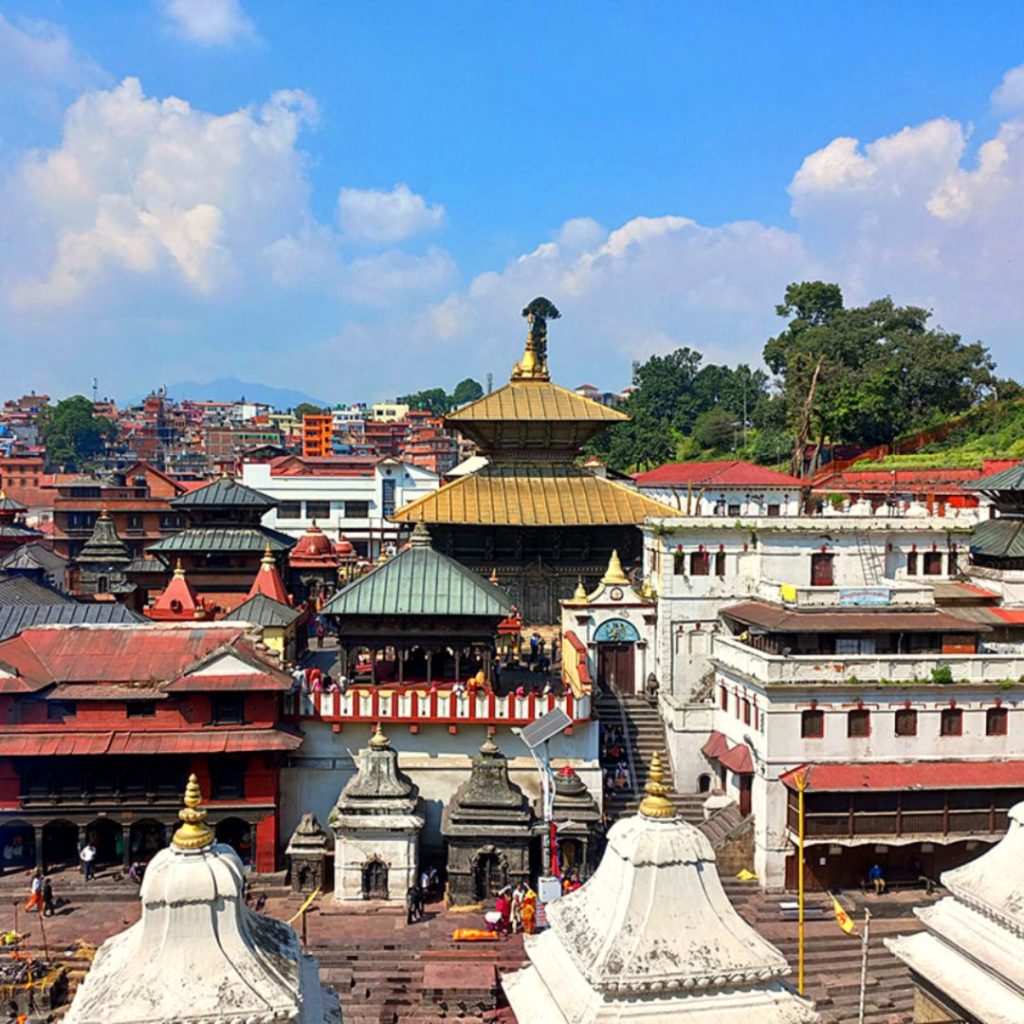
Pashupatinath Temple is one of the finest and most iconic examples of traditional Nepali Pagoda-style architecture. It is not just a religious structure, but a powerful symbol of Nepal’s cultural identity, artistic excellence, and spiritual craftsmanship. The temple reflects centuries of devotion, where architecture is not only built for beauty, but also designed as a sacred space that connects humans with divinity.
The entire structure stands as a masterpiece that blends engineering skill, spiritual symbolism, and artistic detail. Every part of the temple tells a story of faith, tradition, and historical continuity that has been preserved for generations.
Key Architectural Features:
- Golden multi-tiered pagoda roof that shines beautifully under sunlight, representing divine energy and spiritual power
- Ancient wooden carvings that date back centuries, depicting Hindu mythological stories, gods, and sacred symbols
- Silver-plated massive doors that guard the main sanctum, reflecting purity, protection, and sacredness
- Strong wooden beams and structural design, showing traditional Nepali engineering excellence that has lasted for centuries
- Hundreds of smaller temples and shrines spread across the complex, each dedicated to different deities and spiritual practices
When you stand inside the temple complex, the feeling is overwhelming. It feels like you are not just looking at a building, but stepping into a living heritage site where history, devotion, and spirituality still breathe together. The architecture itself creates a powerful atmosphere of peace, devotion, and timeless beauty.
Mythology & History: Divine Origins of Pashupatinath
According to Hindu belief and ancient scriptures, the origin of Pashupatinath Temple is deeply connected with divine events involving Lord Shiva and Goddess Parvati. It is believed that Lord Shiva once took the form of a deer (mrig) and wandered in this peaceful and beautiful region of Kathmandu Valley.
Attracted by the serenity, natural beauty, and spiritual energy of this place, Lord Shiva chose this land as his eternal residence. Later, when other gods searched for him, Lord Shiva revealed his divine form and decided to remain permanently in this sacred location as Pashupati – the protector of all living beings.
Major Mythological Beliefs & Historical Legends:
- Lord Shiva and Goddess Parvati as deer living in this sacred region, symbolizing harmony with nature
- Chaturmukha Shiva Lingam, representing Shiva’s presence in all four directions and universal divine energy
- A miracle where a cow is believed to have poured milk over a hidden Shiva Linga, revealing the sacred site
- Development of the temple from the Licchavi period, one of the earliest dynasties of Nepal
- Major expansion and reconstruction during the Malla and Shah dynasties, which shaped the temple into its present form
These stories make Pashupatinath Temple not just a historical monument, but a divinely originated spiritual center where mythology and history exist together. It is believed that every structure inside the complex carries spiritual energy linked to these sacred events.
Birupakshya (Kirateshwar Mahadev)
Located on the eastern bank of the sacred Bagmati River, within the broader Pashupatinath spiritual complex, the Birupakshya Murti (also associated with Kirateshwar Mahadev) is considered one of the most mysterious and spiritually charged spots in the entire Kathmandu Valley. Unlike most well-defined idols found in temples, this sacred manifestation appears partially submerged in the earth, creating a powerful sense of antiquity, mystery, and unfinished revelation.
Local belief holds that this sacred form is slowly rising from the ground over time, though no scientific explanation supports this claim. This idea has been passed down through generations and has transformed the site into something beyond a religious symbol—it has become a living myth that continues to evolve with faith itself.
Spiritual Meaning and Beliefs
This sacred site holds deep importance for multiple reasons:
- It is strongly associated with the Kirat tradition, one of the ancient indigenous spiritual lineages of Nepal
- It is revered as a manifestation of Kirateshwar Mahadev, a powerful form of Lord Shiva
- Many devotees believe it represents a connection between time, destiny, and cosmic evolution
- Some spiritual interpretations link it to the idea of universal cycles of creation and destruction (cosmic rhythm)
For many pilgrims, this is not just a place of worship but a space where faith meets mystery, encouraging reflection on existence, time, and divine presence.
The surrounding atmosphere further enhances its spiritual depth. The sound of the flowing Bagmati River, distant temple bells, chanting priests, and occasional silence of meditation creates a powerful contrast that makes visitors feel like they are standing at the boundary between the physical and the spiritual world.
Cremation Ghats: The Eternal Truth of Life and Death
The cremation ghats along the Bagmati River are among the most emotionally profound and philosophically powerful areas within the Pashupatinath complex. Unlike typical tourist attractions, this is a place where visitors witness one of the most sacred Hindu rituals—the final rites (antim sanskar) of human life.
These ghats are not viewed with fear or sadness alone in Hindu philosophy, but with deep spiritual acceptance. They represent the belief that death is not an end, but a transition—a passage of the soul toward liberation (moksha).
The Funeral Ritual Process
The cremation ceremony follows a deeply structured spiritual tradition:
- The deceased body is brought to the ghats with prayers and chants
- Family members perform final rituals and offer their respects
- Sacred fire is prepared using traditional wood arrangements
- The body is returned to fire in a symbolic act of release from the physical world
- Priests chant mantras guiding the soul toward peace and liberation
As the flames rise, the smoke blends with the open sky, creating a visual reminder of impermanence and spiritual continuity. The flowing river beside it symbolizes life moving forward without pause, reinforcing the belief that existence is a continuous cycle.
Standing here, many visitors experience a rare realization: life is temporary, but the soul is eternal.
The atmosphere is deeply emotional yet spiritually elevating. Unlike sadness alone, there is also a sense of acceptance, faith, and philosophical clarity that defines Hindu understanding of life and death.
Daily Rituals: The Continuous Flow of Divine Energy
Pashupatinath Temple is not a place that “opens and closes” like ordinary temples—it is a continuously active spiritual system where rituals take place throughout the day, maintaining an uninterrupted flow of divine energy.
The entire complex feels alive, as if devotion itself never sleeps.
Detailed Daily Spiritual Schedule
- 4:00 AM – Early Opening:
The temple gates open before sunrise, marking the beginning of spiritual awakening. Devotees begin arriving for morning darshan in silence and devotion.
- Morning Ritual Bathing of Shiva Lingam:
The sacred Shiva Lingam is ritually bathed with water, milk, honey, and other offerings. This symbolizes purification and renewal of divine energy.
- Mid-Morning Puja and Chanting:
Priests perform various rituals accompanied by Vedic mantras. The atmosphere becomes filled with rhythmic chanting and incense smoke.
- Midday Bhog Offering:
Food offerings are made to Lord Shiva, symbolizing gratitude and divine nourishment.
- Evening Preparation for Aarati:
As the sun begins to set, preparations for the grand evening ritual begin along the Bagmati riverbank.
- Night Closure:
The temple gradually closes after evening rituals, though spiritual energy is believed to remain active throughout the night.
This continuous cycle of rituals creates a unique environment where devotion is not occasional, but constant and living.
Puja & Rituals: A Journey from Simple Devotion to Sacred Power
One of the most significant aspects of Pashupatinath is the wide variety of pujas and spiritual ceremonies performed here. These rituals are designed for different spiritual needs, ranging from personal peace to intense spiritual transformation.
Basic Devotional Practices
- Rudrabhishek Puja:
A powerful Shiva worship ritual involving the offering of milk, water, and sacred chants. It is believed to remove negativity and bring peace.
- Panchamrit Puja:
A symbolic ritual using five sacred elements—milk, curd, honey, ghee, and sugar—representing purification and divine blessings.
Fire-Based Sacred Rituals
- Hom / Havan:
A traditional fire ritual where offerings are made into sacred flames while chanting mantras. It is believed to purify the environment and mind.
- Kotihom:
One of the most powerful rituals involving thousands of mantra repetitions. It is performed for prosperity, protection, and deep spiritual cleansing.
Advanced Spiritual Rituals
- Laghu Rudra Puja
- Maha Rudra Puja
- Ekadashi Rudri Rituals
These are complex ceremonies performed for spiritual upliftment, healing, and deep divine connection.
VIP & Personalized Puja Experience
For devotees seeking a more personal spiritual experience, VIP pujas are also available:
- Personalized rituals based on individual intention (sankalpa)
- Dedicated priest-led ceremonies
- Family-oriented spiritual services
- Customized prayer and offering systems
These pujas are not just religious formalities—they are often performed for mental clarity, emotional healing, and spiritual energy balancing.
Evening Aarati: The Most Divine Moment of Pashupatinath
The Evening Aarati at the Bagmati River is widely considered the most spiritually powerful experience in the entire temple complex.
As the sun sets, the riverbank transforms into a glowing sacred stage filled with devotion, sound, and light.
What Happens During Aarati
- Priests light large oil lamps in synchronized movement
- Conch shells, bells, and drums create a powerful sound vibration
- Devotional songs (bhajans) fill the air
- Hundreds of devotees sit quietly along the riverbank in meditation
- Flames reflect on the flowing river, creating a mesmerizing visual effect
The entire environment feels suspended between time and eternity. The combination of fire, water, sound, and devotion creates a multi-sensory spiritual experience that is difficult to describe in words.
For many visitors, this moment becomes the highlight of their entire journey to Nepal—an experience that stays not just in memory, but in emotion and reflection.
Festivals at Pashupatinath Temple
Pashupatinath Temple becomes extremely vibrant during major Hindu festivals, attracting thousands of devotees from Nepal and around the world.
Maha Shivaratri
The biggest festival dedicated to Lord Shiva. Devotees stay awake all night, perform prayers, chant mantras, and witness sadhus, fire rituals, and divine celebrations throughout the temple.
Teej Festival
A major women’s festival where Hindu women wear red attire, fast, sing devotional songs, and pray to Lord Shiva and Goddess Parvati for family happiness and marital well-being.
Bala Chaturdashi
A sacred festival dedicated to ancestors. Devotees light lamps and offer prayers along the Bagmati River to bring peace to departed souls.
Shravan Month
The holiest month for Shiva worship. Every Monday is highly significant, with Rudrabhishek, fasting, and continuous prayers making the temple highly spiritual.
During these festivals, the temple transforms into a powerful spiritual center filled with devotion, rituals, and divine energy.
Spiritual Atmosphere: Beyond Ordinary Experience
A visit to Pashupatinath is not just sightseeing—it is a deeply spiritual experience.
Visitors feel:
- Sacred smell of incense and dhoop
- Continuous chanting of Vedic mantras
- Sound of bells and conch shells
- Presence of meditating sadhus and saints
- Flowing Bagmati River beside cremation ghats
This combination creates an atmosphere where life, death, and spirituality exist together, offering a unique inner awakening.
Travel Guide by Shivadip Travels
- Located 15–20 minutes from Tribhuvan International Airport
- Easily accessible by taxi, bus, or private vehicle
- Morning visits are peaceful and less crowded
- Evening Aarati is a must-see spiritual highlight
- Guided tours recommended for full cultural understanding
Important Visitor Rules
- Modest dress code required
- Shoes must be removed before entering temple areas
- Non-Hindus cannot enter the main sanctum
- Photography restricted in sacred zones
- Silence must be maintained near cremation ghats
Best Time to Visit
Early morning and evening Aarati time are the most spiritual moments.
Conclusion
Pashupatinath Temple is not just a religious site—it is a place where:
- Life and death are understood deeply
- Spiritual peace can be experienced
- Ancient traditions come alive
- Devotion and culture meet together
A visit here is not just a journey to Kathmandu—it is a journey within yourself.
Shivadip Travels
Travel Nepal. Feel the Culture. Experience the Divine Energy of Pashupatinath.